Posts

Coursework Evaluation
Image
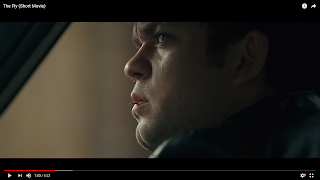
Representation: Mise-en-scene - I created a short film which demonstrates an extreme result of being covetous which includes other sins based around the seven deadly sins from the bible. Others include “sloth” and “greed”. I attempted to portray this to the audience with the different uses of the micro elements of film form. The most prominent being character expression and costume. With costume I went with a smart shirt and tie however I wanted the costume to imply laziness and lack of care, so I had the shirt untucked, tie undone and wrinkled the shirt. This gives the “sloth” sin impression as the character looks lazy and unprofessional. This is emphasised with the setting of the introduction. An empty classroom at 4 o’clock, giving the impression the character is in detention. The use of setting is also found within the character’s bedroom, there are multiple shots demonstrating how messy the room is, the mess further implies that meaning of laziness and thus pushing the “sin” the...

Coursework Film FINAL CUT

EDIT: Video file in Blogger didn't work - Uploaded to Youtube here: https://youtu.be/N4w8E8NuJGA

Short Film Coursework: ROUGH CUT

ROUGH CUT IS HERE Improvements Required: -Audio -Better lighting and messed up resolution, will be fixed -Re-shooting of scenes for better flow and pacing -Faster editing, intro too long. Quality is poor due to change of sequence settings in file conversion - will make sure mistake isn't repeated. Wish to use a SLR camera to include 2 more shots.

Coursework Test Footage:

https://www.youtube.com/watch?v=AU-xbJw6xqA Simple test of making things appear. Added an opacity fade as it's almost being generated rather than just appearing. There is supposed to be a high pitched sound effect that plays as the mug phases into existence however after exporting from premiere, it doesn't play. Apparently it's a problem to do with H.264 files. If this problem is to occur during the final version of the film, I am going to have find a solution. I attempted two different angles, one with a transition effect. The first being a still camera sat in one place, the second being a fast pan.

Camera Shots

We experimented with different variants of camera shots after looking through and explaining each one. From that we created a compilation of different types of camera shots, as seen here: https://www.youtube.com/watch?v=RvcotWe3_2A

Camera Transitions

In class we watched some examples of camera transitions and studied the most intuitive ones. After we watched https://www.youtube.com/watch?v=OAH0MoAv2CI  we wrote down the types of camera transitions and then applied some in a video we created. https://www.youtube.com/watch?v=8E1C6LeYzmc  <-- Our transition video. We used: - Invisible Cut. - Cut Away - Cross Cut - J Cut - Match Cut and a -Dissolve Match Cut.

Montage Sequence

In class we watched the Rocky Training Sequence and the Up opening scene which are montages that take place over an elongated period of time in the film, but displayed in a couple of minutes, with some cases being a couple seconds. We attempted to create something similar with a character doing something over a period of time, but condensed into a small montage using the inspiration from these examples. https://www.youtube.com/watch?v=632hVDL_N6w  <-- Rocky Montage. https://www.youtube.com/watch?v=F2bk_9T482g  <-- Up Opening Scene. https://www.youtube.com/watch?v=7lmbLwvgtHE  <-- The montage we created in class.

Experimenting with Horror Makeup

Image
In class we used a mixture of water, red food colouring, mud and flour to create a liquid which resembles blood and then used wax to cast scars. Our idea was plant based, having a twig emerge from a hand and a leaf come out of a shoulder, as seen here: Our idea has similarities and inspiration from "The Odd Life of Timothy Green". Which, as seen here, has similarities with the leafs coming from the skin. Overall this provided a good insight on using makeup in our final production. I'm thinking of sections where possible makeup could be used within my story.

(Post 8) Dragons Den Pitch Planning

Genre of the film: Satire Contemporary Fantasy. (With a moral aspect). Idea for narrative: Teen on a computer, is told to do homework, he opens a program to write in, once he types something he realises that whatever he writes, it appears next to him (the fantastical feature) (Setup). He messes around with this, I haven't decided what happens in this section quite yet, but eventually he pushes it too far and gets too greedy and either the program crashes and everything disappears, including the program OR the items fill the room and trap him in, causing the character to be stuck in the room. The ending being the character's mum asking / texting him asking if he's done his homework. Either way I want to show that he's been absorbed by greed. Potential Cast: One teenage boy and possible voice for mum. The short film is going to be based around the protagonist going through different scenarios by playing around with this program he has found, starting off simple l...

(Post 6) Film I watched over the Summer

www.youtube.com Script: Over the summer I watched the classic film "Breakfast Club". Breakfast Club came out in 1985, and was directed by John Hughes. "What had you ever heard of this film before". I had heard about this film many times before, being called a classic masterpiece and that it NEEDS to be watched. "What happened in it". The synopsis of the film is that a diverse group of high schoolers ared forced to spend detention on a Saturday in the library. Forced to make the best of their circumstances, they learn to understand each other and discover that in spite of their initial differences, they actually share many common feelings and problems which then bands them together. "What was good?". Well my favourite feature of the film is that it may only be set in one location, but they utilize that location to its fullest, rather than setting being a key focus, it is rather just a small factor which plays a part to the story, being th...

(Post 5) Why are there short films?

What's the point? The point in short films is not to make money, that is the point of feature films. Short films are typically an art movement, either to provide a message, a short burst of entertainment, or to promote the creator so they could be possibly provided with a budget to create a full feature film. To provide entertainment, art or a lesson. Who makes them? Who is in them? Anyone can make a film, as long as multiple images are provided through all sorts of mediums, ranging from filming with a camera, placing images in order to make "frames" or animation. Normally the people in the film are either actors that have been hired for small amounts of money or friends / family of the creator of the film. How and where are they exhibited? Typically short films are either exhibited through either short film competitions usually hosted by award ceremonies or film companies. Other ways of exhibition is through the creator uploading the film to YouTube for anyo...

(Post 4) Generating Film Ideas Sheet

Image
In this task, we had to pick two numbers between 1 and 6 after certain letters, for example mine were: C33 L16 S42 O56 W66 At first we didn't know what the letters meant but shortly afterwards we were given a sheet which displayed what the letters stood for and a table underneath them. This 6x6 table had different descriptions of items within them. C stood for Characters, L for Locations, S for Situations, O for Objects and W for When. As I got C33, I had to go 3 across and 3 down the table and resulted in "Two large spiders." for a character. L16 resulted in "A very deep well." as a location, S42 in "A mummy comes to life." as a situation, O56 an "Unexploded mine" and W66 as "Next year." C33, Two large spiders L16, A very deep well S42, A mummy comes to life O56, An unexploded mine W66, Next year  The point of this is so that we get these features and put them together to create a ...

(Post 3) Genre

Genre A genre is a particular type of literature , painting, music, film, or other art form which people consider as a class because it has special characteristics. Genre Theory   A film genre is a motion picture category based on similarities in either the emotional response to the film (namely, tragic, comic, etc.) or the narrative elements. Most theories of film genre are borrowed from the literary world. The basic genres include fiction and documentary, from which subgenres have emerged, such as docudrama. Other subgenres include the courtroom and trial-focused drama known as the legal drama. Types of fiction which may seem unrelated can also be combined to form hybrid subgenres, such as the melding of horror and comedy such as in the Shaun of the Dead. Other popular combinations are the romantic comedy and the action comedy film. Genre can be guessed or told through the film's techniques, for example mise en scene, cinematography and editing. If...

(Post 3) Vladimir Propp

Vladimir Propp Vladimir Propp was a soviet folklorist and folk lore analyst and he also concluded that all the characters could be resolved into 7 broad character functions in the 100 tales he analysed.    The villain — an evil character that creates struggles for the hero. The dispatcher — any character who illustrates the need for the hero's quest and sends the hero off. This often overlaps with the princess's father. The helper — a typically magical entity that comes to help the hero in their quest. The princess or prize, and often her father — the hero deserves her throughout the story but is unable to marry her as a consequence of some evil or injustice, perhaps the work of the villain. The hero's journey is often ended when he marries the princess, which constitutes the villain's defeat. The donor — a character that prepares the hero or gives the hero some magical object, sometimes after testing them. The hero — the character who reacts to the dis...

(Post 3) 3 Act Structure

Image
The three-act structure is a model used in narrative fiction that divides a story into three parts (acts), often called the Setup, the Confrontation and the Resolution. This is essentially the "beginning, middle and end" of a story, a conventional narrative. For example, in "The Arrival", the introduction is the woman sitting down and ordering a coffee, the confrontation is her establishing to the audience that she is pregnant and then debating with herself through self narrative in that if she want's to keep the baby or not, while also wondering where the man she conceived with is. And the resolution is her, not explicitly saying that she want's to keep the baby, but heavily suggests it while her date arrives.